

Sky-Stuff pt4… THICK DARKNESS/GLOOM: araphel (Strong’s 6205); ephah (Strong’s 5890), ophel (Strong’s 652)
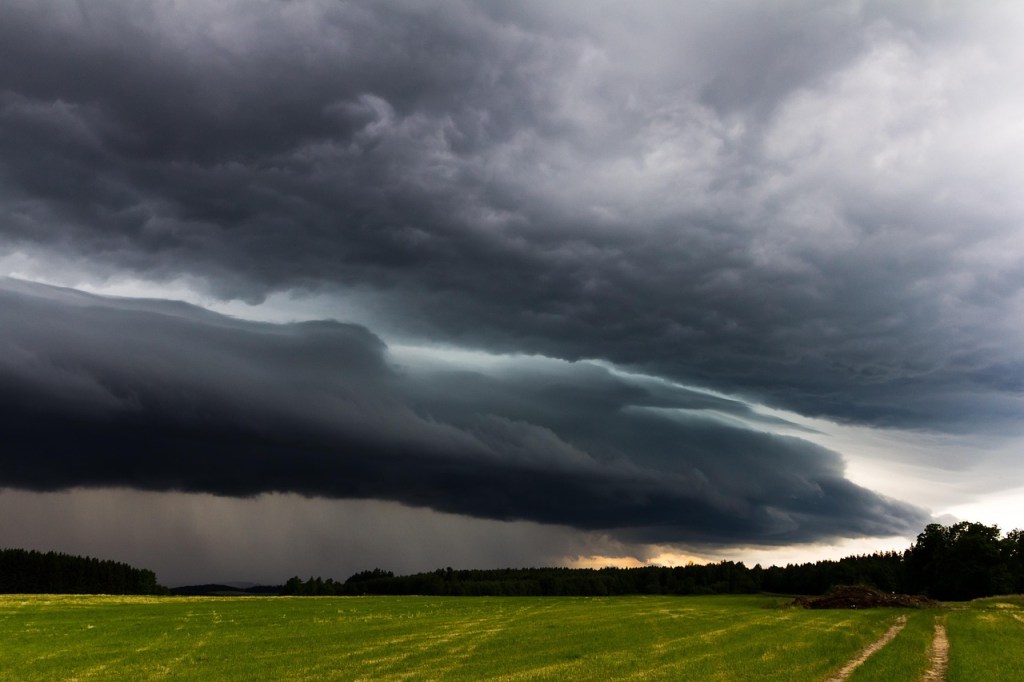
There are three Hebrew words that are synonyms (different words, same meaning) for the image of thick, gloomy, darkness. They are a’raphel, ophel, and ephah. It was meant to represent far more than just darkness in the sky (although some translators fail to give that impression), it was a palpable, atmospheric, darkness. In the Torah it was always associated with the presence of YHWH.
The first example comes from the time when YHWH dramatically approached the Hebrew people, terrifying them:
Exodus 20:18-21
And all the people were watching and hearing the thunder and the lightning flashes, and the sound of the trumpet, and the mountain smoking; and when the people saw it all, they trembled and stood at a distance. Then they said to Moses, “Speak to us yourself and we will listen; but do not have God speak to us, or we will die!”
However, Moses said to the people, “Do not be afraid; for God has come in order to test you, and in order that the fear of Him may remain with you, so that you will not sin.” So the people stood at a distance, while Moses approached the thick darkness [ha-a’raphel הָֽעֲרָפֶ֔ל] where God was.
Then YHWH said to Moses, “This is what you shall say to the sons of Israel: ‘You yourselves have seen that I have spoken to you from heaven. You shall not make other gods besides Me; gods of silver or gods of gold, you shall not make for yourselves. You shall make an altar of earth for Me, and you shall sacrifice on it your burnt offerings and your peace offerings, your sheep and your oxen; in every place where I cause My name to be remembered, I will come to you and bless you…”
Later in the Torah Moses reminded the people of that day when they experienced God’s visual presence and heard God’s voice:
Deuteronomy 4:11-14 (see also Deut. 5:22)
[“Remember the day…] You came forward and stood at the foot of the mountain, and the mountain was burning with fire to the heart of the heavens: darkness, cloud, and thick gloom [wa-a’raphel וַעֲרָפֶֽל]. Then YHWH spoke to you from the midst of the fire; you heard the sound of words, but you saw no form—there was only a voice. So He declared to you His covenant which He commanded you to perform, that is, the Ten Commandments; and He wrote them on two tablets of stone.”
The image of YHWH being in thick darkness was supported in the Psalms:
Psalm 97:1-2
YHWH reigns, may the earth rejoice; may the many islands be joyful.
Clouds and thick darkness [wa-a’raphel וַעֲרָפֶ֣ל] surround Him; righteousness and justice are the foundation of His throne.
The theme of light over darkness is evident throughout the Bible. YHWH is the light in the darkness. Why then was He presented as being surrounded by thick darkness?
Humans, from the fall in the Garden, had forced a separation between them and their Creator, but YHWH refused to let that separation be permanent. His Presence could not be seen by humans. In their failed state they could not face such purity, and so YHWH clothed Himself in darkness in order to be present amongst His people. That is the self-sacrificing beauty of YHWH! He lowered Himself down, shrouded in inglorious darkness, in order to be amongst His people.
In David’s great poem about God’s great deliverance, he doesn’t place YHWH inside the darkness, instead he places YHWH’s feet on top of the araphel (thick darkness), like a defeater of darkness:
2 Samuel 22:2-10 (see also Psalm 18)
[David:] “YHWH is my rock and my fortress and my deliverer; My God, my rock, in whom I take refuge, My shield and the horn of my salvation, my stronghold and my refuge; My Saviour, You save me from violence.
I call upon YHWH, who is worthy to be praised, and I am saved from my enemies. For the waves of death encompassed me; the floods of destruction terrified me; the ropes of Sheol surrounded me; the snares of death confronted me.
In my distress I called upon YHWH, yes, I called out to my God; and from His temple He heard my voice, and my cry for help came into His ears.
Then the earth shook and quaked, the foundations of heaven were trembling and were shaken, because He was angry. Smoke went up out of His nostrils, and fire from His mouth was devouring; coals were kindled by it. He also bowed the heavens down low, and came down with thick darkness [wa-a’raphel וַעֲרָפֶ֖ל] under His feet…”
Deep Darkness in the writings of the Prophets
The earliest visions of YHWH’s presence were high drama moments of smoke, thunder and cloudy darkness, which would have visually produced a gut reaction of fear and awe, and a sense of both gloom and terrifying wonderment. Many translations use “gloom” when transcribing a’raphel/ophel/ephah.
Isaiah 29:18-19
On that day those who are deaf will hear words of a book, and out of their gloom [u-mey-ophel וּמֵאֹ֣פֶל] and darkness the eyes of those who are blind will see.
The afflicted also will increase their joy in YHWH, and the needy of mankind will rejoice in the Holy One of Israel.
In describing the blind, Isaiah doubled down on the darkness imagery. To those who had experienced spiritual blindness, like thick gloomy darkness and sky darkness, sight would be given.
Jeremiah also multiplied darkness synonyms in his writings:
Jeremiah 13:15-17
Listen and pay attention, do not be haughty; for YHWH has spoken.
Give glory to YHWH your God before He brings darkness and before your feet stumble on the mountains in the *dark* dusk/evening. And while you are hoping for light He makes it into *gloom* the shadow of death, and turns it into thick darkness [la-a’raphel לַעֲרָפֶֽל].
But if you do not listen to it, my soul will weep in secret for such pride; and my eyes will shed and stream down tears, because the flock of YHWH has been taken captive.
Both of the prophets, Joel and Zephaniah used the same phrase when describing the coming Day of the LORD:
Joel 2:1-2
Blow a trumpet in Zion, and sound an alarm on My holy mountain! Let all the inhabitants of the land tremble, for the day of YHWH is coming.
Indeed, it is near, a day of darkness and gloom [wa-a’phelah וַאֲפֵלָ֗ה], a day of clouds and thick darkness [wa-a’raphel וַעֲרָפֶ֔ל].
This phrase…
“Yom khoshek wa-a’phelah, yom anan wa-a’raphel”
“A day of darkness and deep darkness, a day of clouds and thick darkness”
…was repeated, verbatim, in the writings of the prophet Zephaniah:
Zephaniah 1:14-16
The great day of YHWH is near, near and coming very quickly.
Listen, the day of YHWH! In it the warrior cries out bitterly, that day is a day of anger, a day of trouble and distress, a day of destruction and desolation, a day of darkness and gloom [wa-a’phelah וַאֲפֵלָ֔ה], a day of clouds and thick darkness [wa-a’raphel וַעֲרָפֶֽל], a day of trumpet and battle cry against the fortified cities and the high corner towers.
Isaiah captured the beauty of YHWH’s light over darkness:
Isaiah 60:1-3
“Arise, shine; for your light has come, and the glory of YHWH has risen upon you.
For behold, darkness will cover the earth and deep darkness [wa-a’raphel וַעֲרָפֶ֖ל] the peoples; but YHWH will rise upon you and His glory will appear upon you. Nations will come to your light, and kings to the brightness of your rising.”
A day would come when the dark separation between God and His children would be dissolved. No longer would He hide in shadow to protect us. He would rise up and shine for all the people, around the world, to safely see.
Ezekiel shared Isaiah’s message was that God would rescue us from the thick darkness and bring us into the light:
Ezekiel 34:11-16
For the Lord YHWH says this: “Behold, I Myself will search for My sheep and look after them. As a shepherd cares for his flock on a day when he is among his scattered sheep, so I will care for My sheep and will rescue them from all the places where they were scattered on a cloudy and gloomy (thick dark) [wa-a’raphel וַעֲרָפֶֽל] day. I will bring them out from the peoples and gather them from the countries and bring them to their own land; and I will feed them on the mountains of Israel, by the streams, and in all the inhabited places of the land. I will feed them in a good pasture, and their grazing place will be on the mountain heights of Israel. There they will lie down in a good grazing place and feed in rich pasture on the mountains of Israel. I Myself will feed My flock and I Myself will lead them to rest,” declares the Lord YHWH. “I will seek the lost, bring back the scattered, bind up the broken, and strengthen the sick; but the fat and the strong I will eliminate. I will feed them with judgment.
Yeshua (Jesus) was the Good Shepherd who was sacrificed, like a Passover Lamb, on the cross. During this horrific event we should no longer be surprised that the sky turned to thick darkness:
Mark 15:33-39 (see also Matt 27:45-54 and Luke 23:44-46)
When the sixth hour came, darkness fell over the whole land until the ninth hour. At the ninth hour Jesus cried out with a loud voice, “Eloi, Eloi, lema Sabaktanei ?” which is translated, “My God, My God, why have You forseken Me?” And when some of the bystanders heard Him, they began saying, “Look! He is calling for Elijah!” And someone ran and filled a sponge with sour wine, put it on a reed, and gave Him a drink, saying, “Let us see if Elijah comes to take Him down.”
But Jesus let out a loud cry, and died. And the veil of the temple was torn in two from top to bottom. And when the centurion, who was standing right in front of Him, saw that He died in this way, he said, “Truly this man was the Son of God!”
In much of the Tanakh, the visual presence of YHWH was enveloped within clouds and darkness. The desire to build a Temple was to satisfy the human desire to house God into a man-made building:
1 Kings 8:12 (see also 2 Chronicles 6:1)
Then Solomon said,
“YHWH has said that He would dwell in the thick darkness [ba-a’raphel בָּעֲרָפֶֽל]. I have truly built You a lofty house, a place for Your dwelling forever.”
Solomon had good intentions, but he did not really understand why God presented Himself in thick darkness. YHWH did it for us. The Temple wasn’t a better hiding place, it was just a more tactile place for humans to visit.
In the Temple, God’s presence was no longer in thick darkness, instead it was hidden behind the curtain in the Holy of Holies. When Yeshua died that curtain was torn apart because the Presence of God no longer had to be hidden for our protection. Yeshua had paid the price of redemption and all humanity could see God’s face and live!
The Scroll of Job and thick, gloomy, darkness
By succumbing to death, Yeshua freed us from the thick and gloomy darkness that death threatens to bring. We should all know this. We should all be enlightened to the fact that the darkness of death no longer has power over us.
Before Yeshua, death was always like a cloud of darkness waiting to envelop the soul. This same gloomy thick darkness was a recurrent theme in the scroll of Job.
Job lamented about the terrible turn in his life. He repeatedly wished he had never been born. Here are his feelings about the night of his birth:
Job 3:6-7
“As for that night, may thick darkness [ophel אֹ֥פֶל] seize it; may it not rejoice among the days of the year; may it not come into the number of the months.
Behold, may that night be barren; may no joyful shout enter it.”
Later, Job returned to the same theme. He wished he had never been born:
Job 10:18-22
[Job to YHWH:] “‘Why then did You bring me out of the womb? If only I had died and no eye had seen me! I should have been as though I had not been, brought from womb to tomb.’
Would He not leave my few days alone?
Withdraw from me so that I may have a little cheerfulness before I go—and I shall not return— to the land of darkness and the shadow of death, the land of utter gloom [ephatah עֵיפָ֨תָה] like thick darkness [ophel אֹ֗פֶל] itself, as the shadow of death without order, and it shines out like gloomy darkness [ophel אֹֽפֶל].”
Job didn’t deny it. Death was the path to personal deep darkness and he felt he was heading there quickly. Sometimes those living in the depths of depression feel like the walking dead. This was exactly where Job stood. But, there was a glimmer of hope that Job held onto:
Job 23:17
[Job about YHWH:] But I am not destroyed by the presence of darkness, and He did not hide the deep darkness [ophel אֹֽפֶל] from my face.”
This darkness that surrounded Job had not yet shattered him. There was hope. But he did wonder… why him? What had he done to deserve such a life?
Job 30:25-28
[Job:] “Have I not wept for the one whose life is hard? Was my soul not grieved for the needy?
When I expected good, evil came; when I waited for light, thick darkness [ophel אֹֽפֶל] came.
I am seething within and cannot rest; days of misery confront me. I go about mourning without comfort; I stand up in the assembly and cry out for help.”
YHWH listened to Job’s cry for help and responded with a splendid retort. God asked Job if he himself understood the complexities of being the Creator. YHWH even included the concept of thick darkness in his great speech:
Job 38:1-11
Then YHWH answered Job from the whirlwind and said,
“Who is this who darkens the divine plan by words without knowledge? Now tighten the belt on your waist like a man, and I shall ask you, and you inform Me!
Where were you when I laid the foundation of the earth? Tell Me, if you have understanding.
Who set its measurements? Since you know. Or who stretched the measuring line over it?
On what were its bases sunk? Or who laid its cornerstone, when the morning stars sang together and all the sons of God shouted for joy?
Or who enclosed the sea with doors when it went out from the womb, bursting forth; when I made a cloud its garment, and thick darkness [wa-a’raphel וַ֝עֲרָפֶ֗ל] its swaddling bands, and I placed boundaries on it and set a bolt and doors, and I said, ‘As far as this point you shall come, but no farther; and here your proud waves shall stop’?
There are, of course, many more pages of YHWH’s response and Job, in the end, conceded, saying:
Job 40:3-4
“Behold, I am insignificant; what can I say in response to You? I put my hand on my mouth.”
Darkness is inevitable. This world is a dark and dangerous place, but YHWH is a great light that can free us from such darkness. He came in the shadow of darkness to protect us, and He sent His Son, to break the barrier between Himself and His children.
Now that that has been accomplished we are free to see God face to face when our time here is complete. We can go to the dwelling place of the Almighty and walk and talk in the light of His love:
Psalm 91:1-9
One who dwells in the shelter of the Most High will lodge in the shadow of the Almighty.
I will say to YHWH, “My refuge and my fortress, My God, in whom I trust!”
For it is He who rescues you from the net of the trapper and from the deadly plague. He will cover you with His pinions, and under His wings you may take refuge; His faithfulness is a shield and wall.
You will not be afraid of the terror by night, ur of the arrow that flies by day; of the plague that stalks in thick darkness [ba-ophel בָּאֹ֣פֶל], or of the destruction that devastates at noon.
A thousand may fall at your side and ten thousand at your right hand, but it shall not approach you. You will only look on with your eyes and see the retaliation against the wicked. For you have made YHWH, my refuge, the Most High, your dwelling place.
Next week: Sermon- The Unapologetic Children

 Hebrew Word Lessons