

Ship/boat: oni/ o’niyah, o’niyoht (plural), feminine noun (Strong’s 590/591); tsiy, tsiyim (plural), masculine noun (Strong’s 6716)
Root: צִי & עֹנִי
Sounds like: oh-nee / oh’nee’yah /oh’nee’yoht / tsee / tsee’yeem
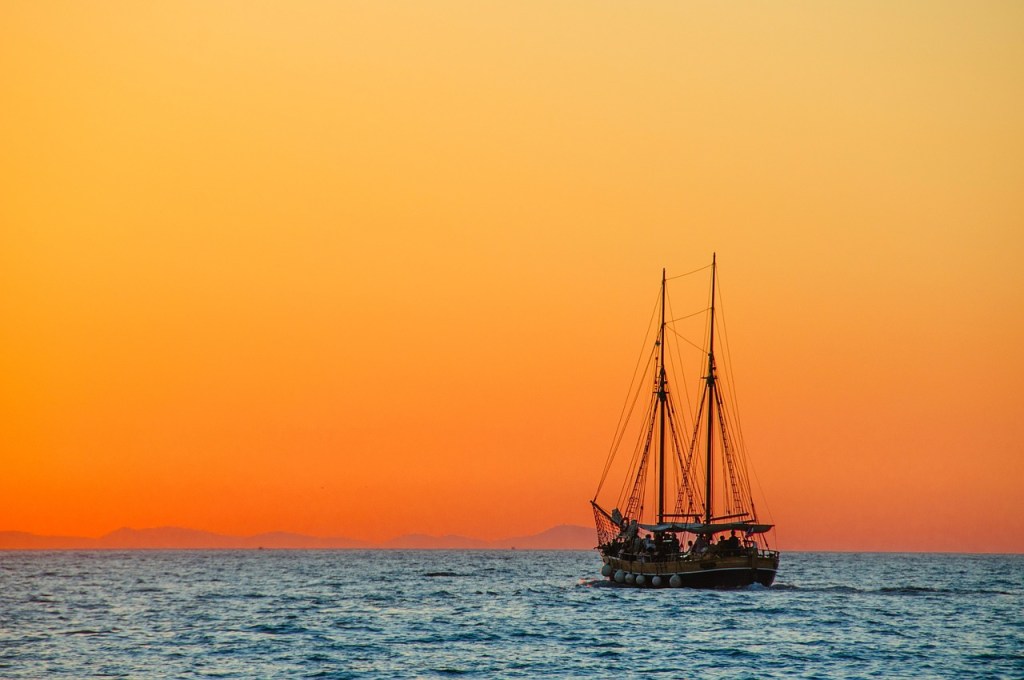
I live on an Island, so boats are forever circling my home. For many years (before I moved to PEI) boats/ships were the only way to get to this little Canadian province. Now we have the 13 km Confederation Bridge, an easy link to mainland New Brunswick. However, you can still take the ferry to Nova Scotia which I had the pleasure of doing this September when I visited my dear library friends, Pat and Penny!
I’ve always loved being on the water. One of my favourite childhood memories was going fishing on the St. Lawrence River with my great Uncle Robert MacLean. He even taught me how to gut and de-bone a fish, (although I wasn’t really a fan of the process). We’d always eat our catch and I have delicious memories of having freshly caught fish on a toasted bun with Aunt Lorna’s yummy fish sauce. Uncle Robert and Aunt Lorna died years ago, but every time I’m out on the water, with the wind in my hair and the smell of the sea, these wonderful memories are brought back to the surface of my mind.
Ships in the Torah
There are only a few mentions of ships/boats in the five books of the Torah. Of Jacob’s son Zebulun, it was said, “he shall be a harbour for ships [o’niyoht אֳנִיּ֔וֹת]” (Genesis 49:13), which was reflected in his tribal land position, between the Mediterranean Sea and the Sea of Galilee.
In the book of Numbers Balaam prophesied that, “ships [w-tsiyim וְצִים֙] shall come from the coast of Kittim (Cyprus), and they shall oppress Asshur and oppress Eber; so they also will come to destruction” (Numbers 24:24).
The final mention of ships in the Torah is found in Deuteronomy, in a list of consequences for disobeying YHWH:
Deuteronomy 28:68
And YHWH will bring you back to Egypt in ships [ba-o’niyoht בָּאֳנִיּוֹת֒], by the way about which I said to you, ‘You will never see it again!’ And there you will offer yourselves for sale to your enemies as male and female slaves, but there will be no buyer.”
Ships of Trade
Ships moved passengers from ‘a’ to ‘b’, but they were used to move commodities for trade. The economic health of a region was dependent on ship trade routes. King Solomon, probably the wealthiest king of the Ancient Near East, had a fleet of ships:
1 Kings 9:26-28
King Solomon also built a fleet of ships [wa-oni וָאֳנִ֡י] in Ezion-geber, which is near Eloth on the shore of the Red Sea, in the land of Edom. And Hiram sent his servants with the fleet [ba-oni בָּֽאֳנִי֙], men of ships [o’niyoht אֳנִיּ֔וֹת וָאֳנִ֡י] who knew the sea, along with the servants of Solomon. And they went to Ophir and received 420 talents of gold from there, and brought it to King Solomon.
Gold and other commodities were brought in from foreign lands, available by sea. King Solomon had made a deal with king Hiram of Tyre to use both Hiram’s ships and the ships of Tarshish for trade:
1 Kings 10:11-12, 22-23 (see also 2 Chronicles 9:17-22)
And the ships of Hiram [oni Hiram אֳנִ֣י חִירָ֔ם] which brought gold from Ophir, brought also in from Ophir a very great number of almug trees and precious stones. The king made from the almug trees supports for the house of YHWH and for the king’s house, and lyres and harps for the singers; such almug trees have not come in again, nor have they been seen to this day…
…For the king had the ships of Tarshish [oni Tarshish אֳנִ֨י תַרְשִׁ֤ישׁ] at sea with Hiram’s ships [oni Hiram אֳנִ֣י חִירָ֑ם]; once every three years the ships of Tarshish [oni Tarshish אֳנִ֣י תַרְשִׁ֗ישׁ] would come carrying gold and silver, ivory, monkeys, and peacocks. So King Solomon became greater than all the kings of the earth in wealth and wisdom.
Gold, almug trees, monkeys, ivory, silver and peacocks… Solomon’s wealth was diverse and vast, but also heavily dependent on traversing the seas.
The Smashing of Ships
Years later one of Solomon’s descendants, Jehoshaphat, tried to build ships in Ezion-geber, like Solomon did, but it did not go well:
2 Chronicles 20:35-37 (see also 1 Kings 22:47-49)
…Jehoshaphat king of Judah allied himself with Ahaziah king of Israel. He acted wickedly in so doing. So he allied himself with him to make ships [o’niyoht אֳנִיּ֖וֹת] to go to Tarshish, and they made the ships [oniyoht אֳנִיּ֖וֹת] in Ezion-geber.
Then Eliezer the son of Dodavahu of Mareshah prophesied against Jehoshaphat, saying, “Because you have allied yourself with Ahaziah, YHWH has destroyed your works.” So the ships [o’niyoht אֳנִיּ֔וֹת] were wrecked and could not go to Tarshish.
This ship-wrecking event was recalled by the Psalmist:
Psalm 48:7-8
With the east wind You smash the ships of Tarshish [o’niyoht אֳנִיּ֥וֹת]. Just as we have heard, so have we seen in the city of YHWH of armies, in the city of our God; God will establish her forever. Selah
Ships in Prophecy
Because ships were such an important part of Ancient economy, it’s not surprising that they have a place in prophetic announcements:
Isaiah 2:12-18
For YHWH of armies will have a day of reckoning against everyone who is arrogant and haughty, and against everyone who is lifted up, that he may be brought low.
And it will be against all the cedars of Lebanon that are lofty and lifted up, against all the oaks of Bashan, against all the lofty mountains, against all the hills that are lifted up, against every high tower, against every fortified wall, against all the ships of Tarshish [o’niyoht Tarshish אֳנִיּ֣וֹת תַּרְשִׁ֑ישׁ] and against all the delightful ships crafts.
And the pride of humanity will be humbled and the arrogance of people will be brought low; and YHWH alone will be exalted on that day, and the idols will completely vanish.
Ships were emblems of power and wealth. Humans were acting like invincible things (grand trees, mountains, mighty towers, strong walls, and vast ships). They seemed impregnable, but God could take them down. Both Isaiah and Ezekiel prophesied that the Tyre, with their merchant ships would fall:
Isaiah 23:1, 14
The pronouncement concerning Tyre:
Wail, you ships of Tarshish [o’niyoht Tarshish אֳנִיּ֣וֹת תַּרְשִׁ֗ישׁ], for Tyre is destroyed, without house or harbour; it is reported to them from the land of Cyprus…
…Wail, you ships of Tarshish [o’niyoht Tarshish אֳנִיּ֣וֹת תַּרְשִׁ֑ישׁ], for your stronghold is destroyed.
Ezekiel 27:1-9, 25-30
Moreover, the word of YHWH came to me, saying, “And you, son of man, take up a song of mourning over Tyre; and say to Tyre, who sits at the entrance to the sea, merchant of the peoples to many coastlands, ‘This is what the Lord YHWH says:
“Tyre, you have said, ‘I am perfect in beauty.’ Your borders are in the heart of the seas; your builders have perfected your beauty. They have made all your planks of juniper trees from Senir; they have taken a cedar from Lebanon to make a mast for you. Of oaks from Bashan they have made your rudders; with ivory they have inlaid your deck of boxwood from the coastlands of Cyprus.
Your sail was of colourfully embroidered linen from Egypt so that it became your flag; your awning was violet and purple from the coastlands of Elishah.
The inhabitants of Sidon and Arvad were your rowers; your wise men, Tyre, were aboard; they were your sailors. The elders of Gebal and her wise men were with you repairing your leaks; all the ships of the sea [o’niyoht ha-yam אֳנִיּ֨וֹת הַיָּ֤ם] and their sailors were with you in order to deal in your merchandise…
…The ships of Tarshish [o’niyoht Tarshish אֳנִיּ֣וֹת תַּרְשִׁ֔ישׁ] were the carriers for your merchandise. And you were filled and were very glorious in the heart of the seas. Your rowers have brought you into great waters; the east wind has broken you in the heart of the seas.
Your wealth, your wares, your merchandise, your seamen and your sailors, your repairers of leaks, your dealers in merchandise, and all your men of war who are in you, with all your contingent that is in your midst, will fall into the heart of the seas on the day of your overthrow.
At the sound of the cry of your sailors, the pasture lands will shake. All who handle the oar, the seamen and all the sailors of the sea will come down from their ships [mey-aniyoh’tehem מֵאָנִיּֽוֹתֵיהֶ֗ם]; they will stand on the land, and they will make their voice heard over you and cry out bitterly. They will throw dust on their heads, they will wallow in ashes.
Isaiah also prophesied about YHWH’s redemption plan using ship imagery:
Isaiah 33:20-24
Look at Zion, the city of our appointed feasts; your eyes will see Jerusalem, an undisturbed settlement, a tent which will not be folded; its stakes will never be pulled up, nor any of its ropes be torn apart.
But there the majestic One, YHWH, will be for us a place of rivers and wide canals on which no boat [oni אֳנִי] with oars will go, and on which no majestic ship [w-tsi וְצִ֥י] will pass— for YHWH is our judge, YHWH is our lawgiver, YHWH is our king; He will save us.
Your ship’s tackle hangs slack; it cannot hold the base of its mast firmly, nor spread out the sail. Then the prey of an abundant spoil will be divided; those who limp will take the plunder. And no resident will say, “I am sick”; the people who live there will be forgiven of their wrongdoing.
The war ships, the merchant ships, the ships that boasted of might and power, in the end they would have no strength in YHWH’s Kingdom. There would be no threat in the sea that YHWH could not overcome for us. The seas would be calmed and the ships would be stilled, and all the plunder would be laid out for the humble followers of YHWH. It’s a beautiful image of redemption written during a time when ships brought not just wealth and commodities, but also war and terror.
Probably the most famous Biblical ship story in the Tanakh (outside of the Ark) is the prophetic story of Jonah’s attempt to escape to Tarshish via ship:
Jonah 1:1-6, 12-17
The word of YHWH came to Jonah the son of Amittai, saying, “Arise, go to Nineveh, the great city, and cry out against it, because their wickedness has come up before Me.”
But Jonah got up to flee to Tarshish from the presence of YHWH. So he went down to Joppa, found a ship [aniyah אָנִיָּ֣ה] that was going to Tarshish, paid the fare, and boarded it to go with them to Tarshish away from the presence of YHWH.
However, YHWH hurled a great wind on the sea and there was a great storm on the sea, so that the ship [w-ha-o’niyah וְהָ֣אֳנִיָּ֔ה] was about to break up. Then the sailors became afraid and every man cried out to his god, and they hurled the cargo which was in the ship [ba-o’niyah בָּֽאֳנִיָּה֙] into the sea to lighten it for them. But Jonah had gone below into the recesses of the ship-hold, had lain down, and fallen sound asleep. So the captain approached him and said, “How is it that you are sleeping? Get up, call on your god! Perhaps your god will be concerned about us so that we will not perish.”
…And he said to them, “Pick me up and hurl me into the sea. Then the sea will become calm for you, because I know that on account of me this great storm has come upon you.”
However, the men rowed desperately to return to land, but they could not, because the sea was becoming even stormier against them. Then they cried out to YHWH and said, “We earnestly pray, O YHWH, do not let us perish on account of this man’s life, and do not put innocent blood on us; for You, YHWH, have done as You pleased.” So they picked up Jonah and hurled him into the sea, and the sea stopped its raging. Then the men became extremely afraid of YHWH, and they offered a sacrifice to YHWH and made vows.
And YHWH designated a great fish to swallow Jonah, and Jonah was in the stomach of the fish for three days and three nights.
Jonah tried to escape to Tarshish on a ship from the port of Joppa. It was in the complete opposite direction and as far away from Ninevah as you could go. He tried to flee from the presence of YHWH, but that was not possible. YHWH stopped Jonah in his tracks, held him under the sea in the belly of a fish for three days and three nights before bringing him back to the land. With divine intervention YHWH turned Jonah’s route back towards Ninevah where he went and preached a short and passionless message: “Forty more days and Nineveh will be overturned!”
There was no passionate plea to stop sinning, or encouragement to turn towards God. Jonah merely gave a warning of what he thought would be the inevitable outcome. Instead, the entire nation repented and turned towards YHWH. It wouldn’t be a long-lasting national conversion but, according to Yeshua, the Ninevites of Jonah’s day would be remembered at the judgement for their repentant hearts.
Ships and Yeshua
The writer of the 107th Psalm highlighted that sailors understood the power of YHWH because they saw it in their many stormy travels on the sea:
Psalm 107:23-32
Those who go down to the sea in ships [ba-o’niyoht בָּאֳנִיּ֑וֹת], who do business on great waters; they have seen the works of YHWH, and His wonders in the deep.
For He spoke and raised a stormy wind, which lifted the waves of the sea. They rose up to the heavens, they went down to the depths; their soul melted away in their misery. They reeled and staggered like a drunken person, and were at their wits’ end.
Then they cried out to YHWH in their trouble, and He brought them out of their distresses. He caused the storm to be still, so that the waves of the sea were hushed.
Then they were glad because they were quiet, so He guided them to their desired harbour. They shall give thanks to YHWH for His mercy, and for His wonders to the sons of mankind! They shall also exalt Him in the congregation of the people, and praise Him at the seat of the elders.
This beautiful picture of YHWH calming the stormy seas was repeated a few times during the life of Yeshua (Jesus):
Matthew 8:23-27 (see also Mark 4:35-41, Luke 8:222-25)
When He [Jesus] got into the boat [Greek: ploion πλοῖον], His disciples followed Him. And behold, a violent storm developed on the sea, so that the boat was being covered by the waves; but Jesus Himself was asleep. And they came to Him and woke Him, saying, “Save us, Lord; we are perishing!”
He said to them, “Why are you afraid, you men of little faith?” Then He got up and rebuked the winds and the sea, and it became perfectly calm. The men were amazed, and said, “What kind of a man is this, that even the winds and the sea obey Him?”
Yeshua being asleep on the stormy boat is reminiscent of Jonah being asleep on the ship to Tarshish. It’s interesting that after His opponents demanded a sign from Him, Yeshua told the people that Jonah was the sign they needed to see:
Matthew 12:38-41
Then some of the scribes and Pharisees said to Him, “Teacher, we want to see a sign from You.”
But He answered and said to them, “An evil and adulterous generation craves a sign; and so no sign will be given to it except the sign of Jonah the prophet; for just as Jonah was in the stomach of the sea monster for three days and three nights, so will the Son of Man be in the heart of the earth for three days and three nights. The men of Nineveh will stand up with this generation at the judgment, and will condemn it because they repented at the preaching of Jonah; and behold, something greater than Jonah is here.”
Yeshua’s sign was the three days and three nights in the belly of hell, and even the terrifying Ninevites will fare better at the judgement than the Pharisees and scribes, because at least Ninevah repented. Yeshua’s mention of the Jonah story would have been enough to remind people of other relevant aspects of Jonah’s story, like being asleep in the ship during stormy weather, and the way the stormed stopped when God stepped into the story.
Yeshua used boats all the time during His life. He took a boat trip, by Himself, after hearing about the death of His cousin, John (Matt 14:13). He preached (more than once) from the side of a boat (Luke 5, Matthew 13:2/Mark 4:1). After He spoke from Simon’s boat to the people on the shore He encouraged the fishermen to drop their nets; immediately they were filled with fish. It was at this point that Simon, one of the fishermen, left his fishing boat and followed Yeshua (Luke 5:1-11). Yeshua repeated this net-dropping miracle after His resurrection, when He met His disciples and provided full nets of fish for breakfast (John 21:2-11).
And, of course, there is the infamous account of Yeshua walking on water. The feeding of the five thousand had just taken place and Yeshua sent His disciples into a boat to go to the other side of the Sea of Galilee. Yeshua stayed ashore, dispersed the crowds, and went up a mountainside to pray by Himself. By that time…
Matthew 14:24-33
…the boat [Greek: ploion πλοῖον] was already a long distance from the land, battered by the waves; for the wind was contrary. And in the fourth watch of the night He came to them, walking on the sea. When the disciples saw Him walking on the sea, they were terrified, and said, “It is a ghost!” And they cried out in fear.
But immediately Jesus spoke to them, saying, “Take courage, it is I; do not be afraid.”
Peter responded and said to Him, “Lord, if it is You, command me to come to You on the water.”
And He said, “Come!”
And Peter got out of the boat [Greek: ploiou πλοίου] and walked on the water, and came toward Jesus. But seeing the wind, he became frightened, and when he began to sink, he cried out, saying, “Lord, save me!”
Immediately Jesus reached out with His hand and took hold of him, and said to him, “You of little faith, why did you doubt?”
When they got into the boat [Greek: ploion πλοῖον], the wind stopped. And those who were in the boat worshiped Him, saying, “You are truly God’s Son!”
There’s so much going on in this passage that a surface reading misses. To the ancient Canaanites, Yam (Hebrew/Semitic word for sea) was their god of the sea. When Yeshua calmed the sea, it was also an announcement that He was the God of all “gods”, ruler over the deep sea, the earth, and the heavens above. It was a bold claim of ultimate divinity. The mighty and uproarious sea bowed down to this Elohim, unlike other (so-called) god of the past or the present. All creation bows down to the God of all gods and the King of all kings.
Have you been on a boat and felt the wild waves of the sea? Maybe your life feels as tumultuous as the wind-swept ocean. Yeshua wants to calm the seas in your life. Call for help and throw out the life-preserver, and He will pull you home to the safety of His shores.
Next week: Revisiting ROCK

 Hebrew Word Lessons