

SALT: melakh, masculine noun (Strong’s 4417); (in Aramaic 4415–4416).
Root: מלח
Sounds like: meh’lakh
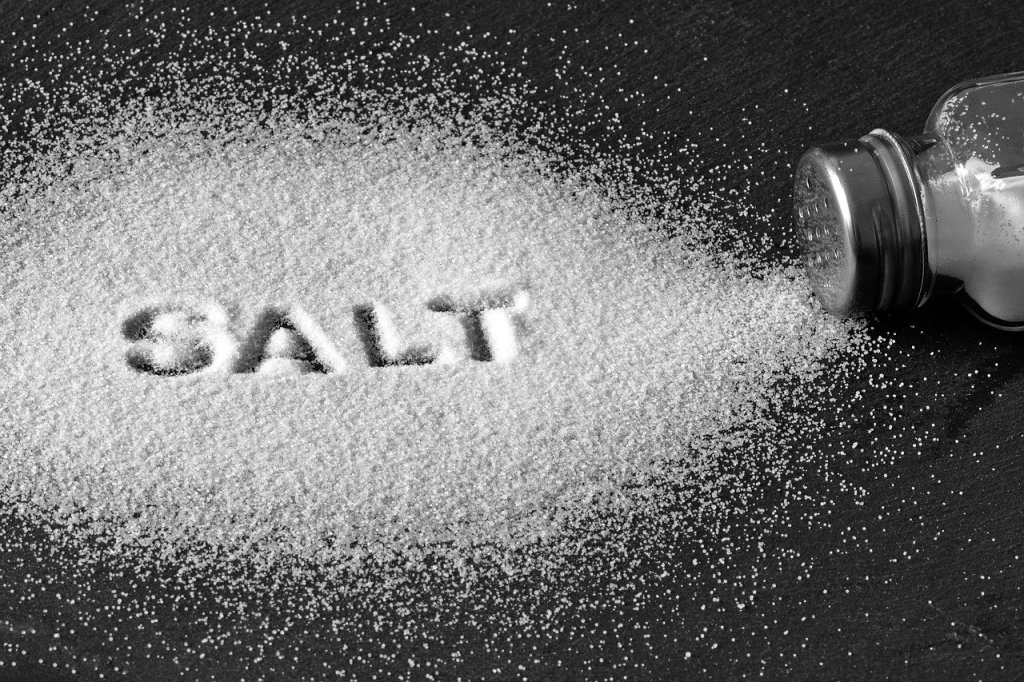
Salt. We take it for granted. We add it to our food, our water heaters, our pools. It’s used in the making of soap and pottery. It’s used as an abrasive cleaning agent. It’s used in the production of clothing materials through dyeing and tanning. In Canada, and other frosty climates, it’s used to melt ice on roads. Today we recognize that there are endless uses for salt. In the Ancient Near East salt was no less appreciated.
Geographically salt has a story to tell in the Bible. The Salt Sea [yam ha-melakh יָ֥ם הַמֶּֽלַח] (found in Genesis 14:3, Numbers 34:3, Deuteronomy 3:17, Joshua 3:16, 12:3, 15:2, 15:5, 18:19) was the Biblical name for what we now know as the Dead Sea. There is also the Valley of Salt [gey ha-melakh גֵּ֣יא הַמֶּ֑לַח], south of the Dead Sea. This was the site of many battles during the years of the Israelite monarchy (see 2 Samuel 8:13, 2 Kings 14:7, 1 Chronicles 18:12, 2 Chronicles 25:11, Psalm 60).
And, of course, we all know about that famous story when Lot’s wife looked back on the destruction of Sodom and turned into a pillar of salt:
Genesis 19:15-17, 26
When morning dawned, the angels urged Lot, saying, “Up, take your wife and your two daughters who are here, or you will be swept away in the punishment of the city.” But he hesitated. So the men grasped his hand and the hand of his wife and the hands of his two daughters, because the compassion of YHWH was upon him; and they brought him out and put him outside the city. When they had brought them outside, one said, “Escape for your life! Do not look behind you, and do not stay anywhere in the surrounding area; escape to the mountains, or you will be swept away.”
…But Lot’s wife, from behind him, looked back, and she became a pillar of salt [melakh מֶֽלַח].
The story of Lot’s wife highlights the connection between salt and destruction. The Salt Sea and the Valley of Salt is a Godless place where next to nothing grows. The ancient sites of Sodom and Gomorrah are settled in that very place. When Lot’s wife turned into salt she became part of the salted barren wasteland.
There are four main aspects to salt that are highlighted in the Scripture: it is a preservative, it is a purifier, it is a soil destroyer, and it also enhances taste.
Preservative & Purifier
The ancient people understood the use of salt as a purifier and a preservative. Adding salt to water purified it and coating meat in salt helped preserve the meat. In one of Elisha’s many miracles, he threw salt into water to symbolically purify it:
2 Kings 2:19-22
Then the men of the city said to Elisha, “Behold now, the site of the city is pleasant, as my lord sees; but the water is bad and the land is unfruitful.” And he said, “Bring me a new jar, and put salt [melakh מֶ֑לַח] in it.” So they brought it to him. Then he went out to the spring of water and threw salt [melakh מֶ֑לַח] in it and said, “This is what YHWH says: ‘I have purified these waters; there shall not come from there death or unfruitfulness any longer.’” So the waters have been purified to this day, in accordance with the word of Elisha which he spoke.
A dash of salt wouldn’t completely purify putrid water so this was a miracle, but the salt was a symbol of purification which was an image the people understood. In the same way, the priests threw salt on meat offerings to purify and preserve the meat:
Ezekiel 43:22-24
“And on the second day you shall offer a male goat without blemish as a sin offering, and they shall cleanse the altar from sin as they cleansed it with the bull. When you have finished cleansing it, you shall offer a bull without blemish and a ram without blemish from the flock. You shall offer them before YHWH, and the priests shall throw salt [melakh מֶ֔לַח] on them, and they shall offer them up as a burnt offering to YHWH.”
Salted Wasteland
Although salt was a purifier of water, it could also be a destroyer of soil/land. It was used in military campaigns to ruin the lands of their enemies:
Judges 9:44-45
Then Abimelech and the company who was with him rushed forward and stood at the entrance of the city gate; the other two companies then attacked all who were in the field and killed them. Abimelech fought against the city that whole day, and he captured the city and killed the people who were in it; then he tore down the city and sowed it with salt [melakh מֶֽלַח].
A land full of salt had a difficult time promoting life. Things don’t grow well in salt. The destructive power of salt was a reminder to hold onto the covenantal relationship with YHWH, the Creator and Promoter of life:
Zephaniah 2:8-9
[YHWH:] “I have heard the taunting of Moab and the abusive speech of the sons of Ammon, with which they have taunted My people and boasted against their territory. Therefore, as I live,” declares YHWH of armies, the God of Israel, “Moab will assuredly be like Sodom, and the sons of Ammon like Gomorrah— ground overgrown with weeds and full of salt [melakh מֶ֥לַח], and a permanent desolation. The remnant of My people will plunder them, and the remainder of My nation will inherit them.”
Biblical authors often recalled the two doomed cities of Sodom and Gomorrah as a salty wasteland (the area of the Valley of Salt, the Salt Sea, and the location of Lot’s wife’s doom). Those who rebelled against YHWH were compared to Sodom and Gomorrah with their fate tied to the doomed salty cities:
Deuteronomy 29:22-25
“Now the future generation, your sons who rise up after you and the foreigner who comes from a distant land, when they see the plagues of that land and the diseases with which YHWH has afflicted it, will say, ‘All its land is brimstone and salt [wa-melakh וָמֶלַח֮], burned debris, unsown and unproductive, and no grass grows on it, like the overthrow of Sodom and Gomorrah, Admah and Zeboiim, which YHWH overthrew in His anger and in His wrath.’
All the nations will say, ‘Why has YHWH done all this to this land? Why this great outburst of anger?’
Then people will say, ‘It is because they abandoned the covenant of YHWH, the God of their fathers, which He made with them when He brought them out of the land of Egypt.’”
Covenant of Salt
Abandoning the Covenant of YHWH was the gravest of sins, yet it happened over and over again. The Hebrew people forgot who they were and where they came from. They turned away from YHWH and towards the pagan gods of their neighbours. But YHWH’s Covenant promises were not so fragile that they would fall apart in response to human behaviour. Regardless of the faithlessness of His people, YHWH’s covenant promises were permanent and pure. To highlight this immutability, the phrase Covenant of Salt (b’rit melakh) can be found peppered (see what I did there) throughout the Tanakh. The first time we come across the covenant of salt it was connected to laws regarding grain offerings:
Leviticus 2:13
Every grain offering of yours, moreover, you shall season with salt [ba-melakh], so that the salt of the covenant [melakh b’rit מֶ֚לַח בְּרִ֣ית] of your God will not be lacking from your grain offering; with all your offerings you shall offer salt [melakh מֶֽלַח].
There were a few reasons to add salt with your offerings. Salt dehydrates mold spores, which would help keep the offerings pure and edible. Salt also helps preserve food, keeping it from spoiling quickly. Salt adds flavour, and much of the offerings were given to the priests and their families, who no doubt appreciated tasty, clean, and well-preserved food. In fact, the priestly portion of the offerings were described as a permanent covenant of salt:
Numbers 18:19-20
[YHWH to the priests:] “All the offerings of the holy gifts, which the sons of Israel offer to YHWH, I have given to you and your sons and your daughters with you, as a permanent allotment. It is a permanent (forever) covenant of salt [b’rit melakh בְּרִית֩ מֶ֨לַח] before YHWH to you and your descendants with you.” Then YHWH said to Aaron, “You shall have no inheritance in their land nor own any portion among them; I am your portion and your inheritance among the sons of Israel.”
When the united kingdom broke apart and split into two (Israel vs Judah) YHWH’s covenant with David (the promise of an eternal kingdom) seemed to be in jeopardy. Abijah, king of Judah (and David’s great grandson), stood on the battlefield and reminded his opponent (king Jeroboam of Israel) that YHWH had made a Covenant with David, which Abijah called a “covenant of salt”:
2 Chronicles 13:4-5, 8-12
Then Abijah stood on Mount Zemaraim, which is in the hill country of Ephraim, and said, “Listen to me, Jeroboam and all Israel: Do you not know that YHWH God of Israel gave the rule over Israel forever to David and his sons by a covenant of salt [b’rit melakh בְּרִ֥ית מֶֽלַח]?…
…“So now you intend to assert yourselves against the kingdom of YHWH through the sons of David, being a great multitude and having with you the golden calves which Jeroboam made for you as gods. Have you not driven out the priests of YHWH, the sons of Aaron and the Levites, and made for yourselves priests like the peoples of other lands? Whoever comes to consecrate himself with a bull and seven rams, even he may become a priest of things that are not gods. But as for us, YHWH is our God, and we have not abandoned Him; and the sons of Aaron are ministering to YHWH as priests, and the Levites attend to their work. Every morning and evening they burn to YHWH burnt offerings and fragrant incense, and the showbread is set on the clean table, and the golden lampstand with its lamps is ready to light every evening; for we perform our duty to YHWH our God, but you have abandoned Him. Now behold, God is with us at our head, and His priests with the signal trumpets to sound the war cry against you. Sons of Israel, do not fight against YHWH God of your fathers, for you will not succeed.”
Abijah warned his northern cousins about their impending loss. He announced that YHWH was on the side of David and his promised kingdom. The covenant of salt that Abijah referred to was the preserved and purified promise of an eternal Kingdom in the line of David, and it was worth fighting for. In this instance YHWH did, indeed, back up Abijah and the kingdom of Judah. Israel was defeated and Jeroboam succumbed to death.
Salt Improves the Taste
As a modern people, we probably connect salt with taste more than anything else. It was, of course, a flavour enhancer. Job asked, can something tasteless be eaten without salt [melakh מֶ֑לַח]? (Job 6:6). The answer is yes it can, but why would you want to eat something tasteless? We humans love flavourful things. Yummy, tasty, food give us pleasure!
Paul used the image of tasty salt in his letter to the Colossians::
Colossians 4:5-6
Conduct yourselves with wisdom toward outsiders, making the most of the opportunity. Your speech must always be with grace, as though seasoned with salt [Greek: halati], so that you will know how you should respond to each person.
Our words should be enhanced with the good flavour of grace, humility and truth… giving a taste of God to the people.
Yeshua (Jesus) used the image of salt to highlight the flavour profile of His followers:
Mark 9:50
“Salt [Greek: halas] is good; but if the salt becomes unsalty, with what will you make it salty again? Have salt in yourselves, and be at peace with one another.”
In other words, don’t become bland adherents without spirit; we are called to be passionate and peaceful followers of YHWH.
Having salt in us means having the Spirit within us, the Spirit that enhances life, preserves life, gives life its unique flavour. It has the power to destroy evil and also purify the good. It highlights the full package that the Spirit brings to the one who activates the Spirit within them.
Matthew’s version of Yeshua’s words on salt (from the Sermon on the Mount) are slightly different than Mark’s account:
Matthew 5:13
“You are the salt [Greek: halas] of the earth; but if the salt has become tasteless, how can it be made salty again? It is no longer good for anything, except to be thrown out and trampled underfoot by people.”
Salt can’t be “re-salted”; without taste it has no purpose. If we lose our “saltiness”, we lose our worth. Only YHWH can redeem us from such fate.
Next time you grab for the table salt let it be a reminder of God’s love for you. He has preserved and purified you. He has enhanced your life and made you flavourful! You have great worth like the finest of sea salt, so go out and be salty people. Add some flavour to this hungry world!
Next week: vinegar

 Hebrew Word Lessons